
 PDF Download
 PubReader
 Export Citation
 Email the Author
 Share Facebook
 Share Twitter
 Cited by 0 Article
 Metrics (View:60)







I. Introduction
Cheese is a representative dairy product produced by coagulating milk, cream, skim milk, or their mixtures and subsequently removing whey (Biss, 1988). The coagulation process occurs through acidification, enzymatic action, or microbial activity, during which the major milk protein, casein, interacts with milk fat to form the characteristic cheese matrix (Kim et al., 2011). After production, the texture, flavor, and overall quality characteristics of cheese are largely determined by factors such as moisture content, fat composition, protein structure, ripening conditions, and microbial activity. Due to variations in raw milk composition and manufacturing processes, more than 2,000 varieties of cheese have been reported worldwide (Berlitz et al., 2004). Cheese is believed to have originated around 3000 CE in the Arabian region, where the coagulation of milk stored in animal stomachs was first observed. Since then, cheese has developed into an important dairy product globally owing to its high nutritional value and extended shelf life (Kim, 2017; Ridgwell and Ridgway, 1968).
Cheeses can be classified into various categories according to manufacturing processes and ripening characteristics, with natural cheese and processed cheese being the most common types (Ministry of Food and Drug Safety, 2018). Natural cheese is produced by coagulating milk proteins and fat, followed by whey removal, and is typically consumed either fresh or after a ripening (Park et al., 2016). In contrast, processed cheese is manufactured by heating and emulsifying natural cheese with emulsifying salts, followed by molding and cooling. According to the standards of the Ministry of Food and Drug Safety, processed cheese must contain at least 18% cheese-derived milk solids and may include dairy ingredients, other food materials, or additives (Keum, 2019). In evaluating cheese quality and classification, proximate composition parameters such as moisture, fat, and protein contents are widely used. In particular, moisture on a fat-free basis (MFFB) is internationally recognized as an important index for distinguishing cheese texture and type. MFFB represents the moisture content relative to the fat-free portion of cheese and is commonly used to categorize cheeses into soft, semi-hard, hard, and extra-hard groups.
The cheese industry in Korea began to develop in earnest after 1967, and the production of both natural and processed cheeses has steadily increased. In recent years, cheese consumption in Korea has expanded rapidly due to the westernization of dietary habits and the growth of the food service industry, resulting in increased availability and diversity of cheese products in the market (Ham, 2023; Han et al., 2020; Kim, 2019). Despite the increasing consumption and diversification of cheese products in Korea, systematic information on the proximate composition of cheese products distributed in the domestic market remains limited. Official statistics mainly provide data on cheese consumption and per capita intake (Ministry of Agriculture, Food and Rural Affairs, 2019), and previous Korean studies have often focused on specific cheese types (Hong et al., 2023). Therefore, a systematic evaluation of the compositional characteristics of domestically distributed cheese products is necessary to provide baseline data for quality assessment, classification, and product standardization.
II. Materials and Methods
To analyze the quality of cheeses distributed in the domestic market, 36 cheese products, including 7 natural cheeses and 29 processed cheeses, were purchased from nearby marts and online markets. Samples were selected based on market availability to include commonly accessible natural and processed cheese products. The selected samples included Cream cheese, Brie cheese, Camembert cheese, Grana Padano cheese, Mozzarella cheese, Cheddar cheese, Gouda cheese, and mixed cheese, among others (Table 1).
Moisture content was measured using a modified atmospheric pressure heating drying method, as specified in the Food Public Code. A weighing dish containing 20 g of mesh sand and a glass stirring rod was heated for 12 hours to achieve a constant weight. Subsequently, 3 g of the sample was accurately weighed, mixed with the sand using the stirring rod, and dried in an oven at 100°C for 12 hours. After drying, the sample was cooled in a desiccator for 30 minutes, and the final weight was recorded. The moisture content was calculated using the obtained values.
W1: Mass of the weighing dish and the sample (g)
W2: Mass after achieving constant weight following drying (g)
W3: Mass of the weighing dish (g)
Crude fat content was determined using the Rose-Götter method, as specified in the Food Public Code. Approximately 1 g of the homogenized sample was hydrolyzed with hydrochloric acid and at 80°C for 45 minutes, followed by sequential extraction with ethanol, diethyl ether, and petroleum ether in a Mojonnier fat extraction tube. The extraction fat was transferred to a pre-weighed Erlenmeyer flask, and residual solvents were removed using a rotary evaporator under reduced pressure and nitrogen gas. The flask was then dried at 102°C to a constant weight, and the crude fat content was calculated using the following formula.
W1: Weight of the extraction flask after crude fat extraction and drying (g)
W0: Weight of the extraction flask (g)
S: Weight of the sample taken (g)
Crude protein content was determined using the Kjeldahl method, as outlined in the Food Public Code. Approximately 1 g of the homogenized cheese sample was digested with sulfuric acid in the presence of a catalyst at 420°C until the solution became clear. After cooling, the digested solution was subjected to automated distillation and titration using a FOSSTM Kjeldahl analyzer (FOSS, Hillerød, Denmark). The nitrogen content was converted to crude protein by multiplying it by the standard conversion factor of 6.38 for dairy products, and the result was expressed as a percentage of the sample’s weight.
MFFB (%) is moisture on a fat-free basis. The moisture content in cheese is the moisture content of the ingredients excluding fat. It is calculated by subtracting the fat from the weight of the cheese, dividing the result by the moisture weight of the cheese, and then multiplying by 100.
W2: Weight of moisture in the cheese (g)
W1: Weight of cheese (g)
W0: Weight of fat in the cheese (g)
Statistical analysis was performed using GraphPad Prism version 11.0.0. Differences in moisture, crude fat, and crude protein contents between natural and processed cheese samples were analyzed using the Mann-Whitney U test. A p-value of less than 0.05 was considered statistically significant.
III. Results and Discussion
In Korea, natural and processed cheeses are classified and evaluated according to the Korean Industrial Standard, which defines quality specifications based on textural characteristics, moisture content on a fat-free basis (MFFB), and microbiological safety. The standard divides cheeses into four categories: soft, semi-hard, hard, and extra-hard, depending primarily on their MFFB values. Soft cheese must have an MFFB of at least 67%, while semi-hard cheese ranges from 54% to less than 69%. Hard cheese must have an MFFB ranging from 49% to less than 56%, and extra-hard cheese is required to have less than 51%. This classification reflects differences in manufacturing processes and moisture content, which significantly influence the texture, shelf life, and overall quality of the final product. In addition, all categories must test negative for coliform bacteria, emphasizing the importance of microbiological safety in commercially distributed cheese products (Korean Agency for Technology and Standards, 2022; Korean Agency for Technology and Standards, 2024). This standard serves as a regulatory framework for domestic cheese manufacturers and provides a reference point for evaluating the compliance and quality of cheese products available in the domestic market.
A notable characteristic of the Korean cheese market is that the processed cheese sector – comprising products made primarily from natural cheese and offering extended shelf life through various packaging formats – is approximately 1.5 to 2 times larger than the natural cheese market (Kim, 2017).
The proximate composition of cheese is fundamental determinant of its texture, nutritional value, and functional properties, and is closely associated with moisture, fat, and protein contents. All measurements were conducted in duplicate, and the data are expressed as mean values. In general, cheeses with lower moisture content tend to exhibit higher protein density and firmer structure, whereas cheeses with higher moisture content typically show lower protein concentration and a soft texture, reflecting differences in manufacturing processes and intended use (Park, 1990).
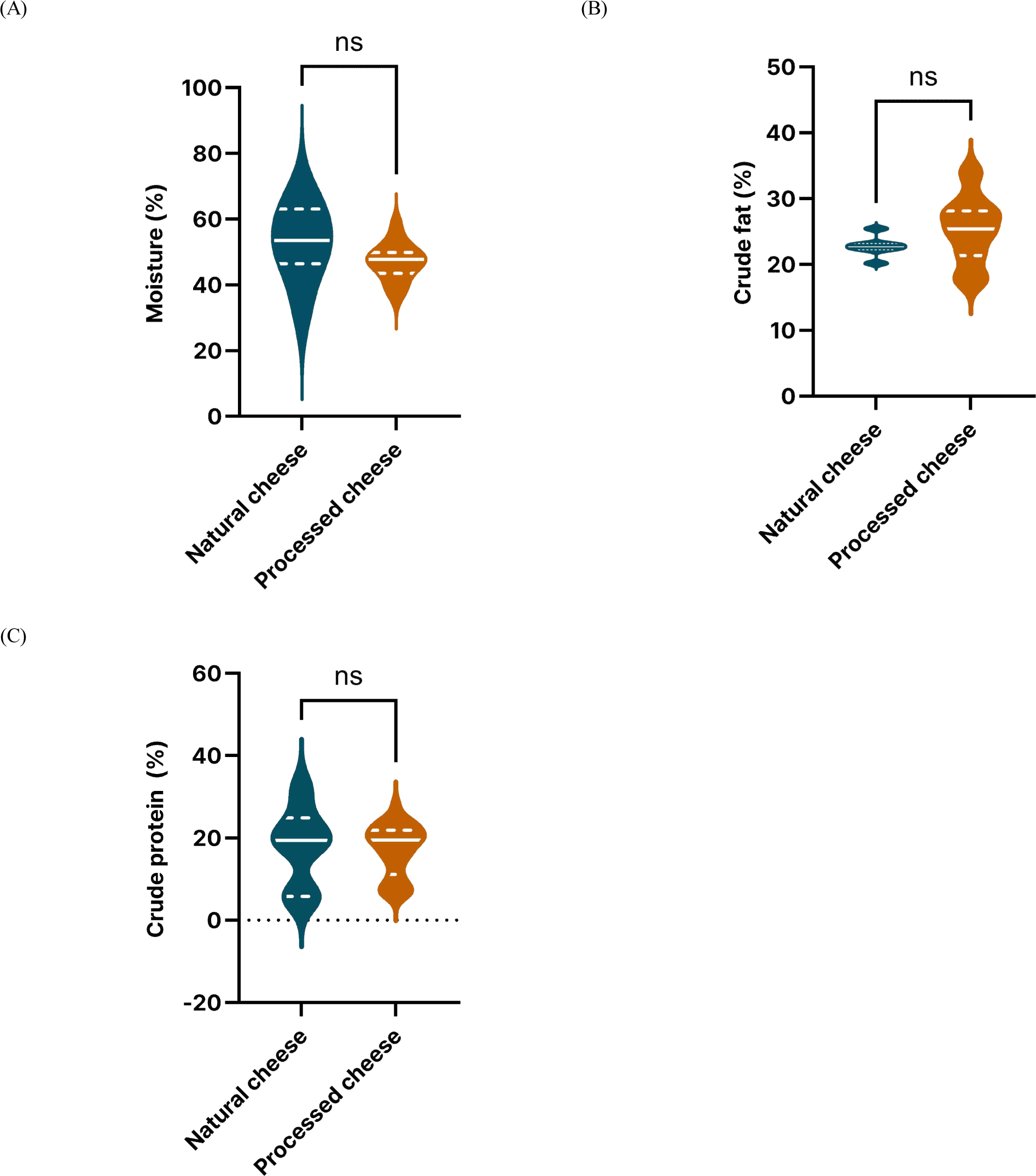
Fig. 1 summarizes the proximate composition of the 36 cheese samples analyzed in this study, encompassing both natural and processed cheeses. Although the two cheese groups showed different distribution patterns, no statistically significant differences were observed in moisture content, crude fat, or crude protein contents between natural and processed cheeses (Mann-Whitney U test, p > 0.05). Among the natural cheeses analyzed, cream cheese exhibited the highest moisture content at 66.50%, followed by Camembert (57.18%) and Brie (53.56%), which also showed relatively high moisture levels. In contrast, Mozzarella (49.08%) and Grana Padano (33.27%) presented lower moisture contents, indicating differences associated with the degree of ripening and cheese type. In Feeney et al. (2021), similar moisture contents were reported, with Mozzarella at 49.8% and Brie at 48.6%. Processed cheeses displayed a broader moisture range overall; spreadable Cream cheese products generally exhibited high moisture content, whereas harder cheeses such as Cheddar and Gouda tended to have lower moisture levels. This wide variability observed in processed cheeses likely reflects intentional formulation adjustment to achieve specific textural properties, shelf life, and functional performance. The crude fat content of the cheese samples ranged from 17.20% to 34.20%, with substantial variation observed across cheese types. In particular, processed cheeses exhibited a wide distribution of fat content, which may be attributed to differences in raw material composition, the use of emulsifying salts and stabilizers, and formulation strategies designed to optimize texture and storage stability. Crude protein content also showed considerable variation among samples, ranging from 5.58% to 31.94%. Natural cheeses generally exhibited higher protein content than most processed cheeses, consistent with their lower moisture content and higher curd density. However, certain processed cheeses also displayed relatively high protein levels, indicating that protein content is strongly influenced by product formulation and intended functionality. These findings highlight the compositional diversity of processed cheeses, which encompass a wide range of nutritional profiles to meet diverse market demands.
To further characterize cheese types based on compositional criteria, moisture on a fat-free basis (MFFB) was calculated and applied as a classification index. The Korean Industrial Standards for cheese classification based on MFFB are consistent with those established by Codex and the International Dairy Federation (IDF). In the present study, cheeses were classified solely according to MFFB values of less than 50 were classified as extra-hard, those between 50 and less than 55 as hard, those between 55 and less than 67 as semi-hard, and those with values of 67 or higher as soft. As shown in Table 2, natural cheeses were primarily distributed within the soft and semi-hard categories, with a smaller proportion classified as extra-hard. In contrast, processed cheeses were predominantly categorized as semi-hard, with fewer samples classified as soft. Notably, extra-hard cheeses were observed exclusively among natural cheeses and were not present in the processed cheese category. These results demonstrate that proximate composition, particularly moisture-related parameters, plays a critical role in distinguishing cheese types and reflects both traditional manufacturing practices and formulation-driven characteristics of processed cheeses.
As shown in Table 2, a notable aspect of the Korean cheese industry is its overwhelming reliance on processed cheese products. Approximately 80% of the processed cheese samples were classified as semi-hard based on MFFB, while soft and hard types accounted for much smaller proportions (13.79% and 6.90%, respectively). In contrast, natural cheeses showed a more varied distribution, though they were significantly underrepresented in overall frequency.
This distribution reflects the current state of the Korean cheese market, where processed–largely semi-hard in nature–dominates both production and consumption. This skewed sample representation highlights the need for more balanced monitoring and support policies that also promote diversity and quality in natural cheese production. Furthermore, systematic characterization and comparative analysis of the fundamental quality attributes of cheeses distributed in the market may serve as essential baseline data for quality standardization and the expansion of product diversity with the domestic cheese industry.
IV. Conclusion
This study provides a foundational analysis of cheese products distributed in the Korean market based on MFFB classifications and basic compositional attributes. Unlike previous studies that mainly focused on specific cheese types or individual products, this study systematically compared the overall compositional characteristics and MFFB-based classification of commercial natural and processed cheeses. The predominance of semi-hard processed cheese suggests a limited product spectrum in the domestic market, with natural cheeses being notably underrepresented. These findings highlight current market characteristics and indicate the need for greater product diversity and improved standardization. However, this study was limited by the relatively small number of natural cheese samples and the restricted variety of cheese types included. Future investigations should incorporate a wider range of natural cheeses and cheese varieties, and include sensory and functional analyses to support improved quality standards and market development.


